How to Collaborate using Google Drive


image

      Google Drive offers people a great way to collaborate and share ideas. Teachers and business professionals alike can share documents and presentations along with editing them. In today’s world, we all need to collaborate to be successful. Google Drive has made my life a whole lot easier.

           Google Drive allows users to organize their documents and presentations in folders. These folders can be shared with other users, where documents and presentations can be viewed and edited; making collaboration very easy. Setting up Google Drive is quick and easy. The first thing that you need to do is create a Gmail account. Once you create a Gmail account, you can access a host of Google’s products and services from the drop down window in the browser.

           Google offers a suite of products inside of Google Drive. The products include: Google Docs which is similar to a Microsoft Word program, Google Slides which is similar to Microsoft PowerPoint and Google Sheets which is similar to Microsoft Excel. When you create and/or edit something, it is saved to the cloud automatically; you do not need to hit save or save as as you would have to with Microsoft’s products. Being that Google Drive is cloud based, my computer and hard drive are freed from having to store large files; allowing my computer to keep up its processing speed. I can also view and edit documents/presentations on multiple devices; which is something I could not do if I simply saved it on my computer. I appreciate this feature being that I am constantly on the go.

            Google Slides are also great for presentations where you want to use video. You can copy the video link from YouTube and embed the video-player in the slide. This allows your presentation to flow without having to stop to search for a video. You will also save time when creating your presentation.

            Google Docs can be downloaded to a Microsoft Word file and/or a PDF. Google Slides can be downloaded to a Power Point format. This makes sharing documents with non Google Drive users a snap. Simply attach the converted file to an email or just print it out. Word documents and PowerPoints can also be uploaded to Google Drive where you will be given the option to edit the document or presentation in its Google Drive format. (Google Docs, or Google Slides)

            Google Drive also offers users the ability to create forms with a service called Google Forms. Google offers a Google Drive App for mobile devices and the Desktop letting users quickly access documents and presentations without having to go through the browser; which saves users valuable time.

         Google Drive is a very valuable resource. Individual users can sign up for free.

         Don’t take my word for it; try it for yourself.
image credit http://www.androidauthority.com

Lessons Learned from Selling: By, Dan Galante

timothygrantcarter's avatargutsisthekey

Every once in a while, a young professional strikes me with their talent and promise. And so I follow their career to watch success develop. Dan Galante is one of these. A few years ago, I came in contact with him through his sales related thoughts and have enjoyed watching his professional growth and talent. His on-target #sales and marketing ideas are vital, relevant and profit producing. Below are some of them. I suggest visiting his site regularly. You can also find some of his #salescategory thinking at the #salescategory tag, on twitter.

————————————————————————————–

Sales has taught me many things.

By: Dan Galante

Below is a list of what I learned from selling:

1. To go after what I want in life. Ask for the order if you will.

2. To stand tall in the face of rejection and negativity.

3. To look at rejection as a learning experience instead of…

View original post 127 more words

Where’s the Beef?

The prices of Beef have sky rocketed lately. I went out to dinner at a popular restaurant in New York City and the size of the steak I usually get; shrank to about half of the size for roughly the same amount of money. That is a hugh price increase!

Has anyone else noticed a similar trend when dining out? Tweet me at @DanGalante with your story.

The 2015 New York International Auto Show: Where Direct, Digital and Trade Show Marketing Meet

Trade shows are a great opportunity for brands and whole industries to sell and market their products. I have experienced this first hand during my time in Outside Sales and Marketing. Since then, Social Media has exploded. Last week, I had the privilege of covering the New York Auto show as I do each year. This trade show is an example how the Auto industry interconnects  digital, direct and Trade show marketing in one synergy. The New York International show is promoted through various social networks, advertising and direct marketing i.e promotions and discounts. However, the marketing does not end once you visit the show. Visitors are provided with literature from each auto brand along with the opportunity to view and engage with live exhibits. Visitors are then encourage to share their experience with others via Social Networks which provides free advertising for show organizers and auto brands. Cars and trucks are available to to sit in allowing potential buyers to get a feel for the vehicles.

Below, I have provided pictures and video highlights from my coverage but it is no substitute for being there. The show runs from April 3rd to April 12th. Stop by and visit if you are in the New York area!

Jeep offers a ride and drive experience.

Dodge also has an amazing looking Viper.

Ford has also done an amazing job with their display. The Ford GT a remarkable looking Sports car.

Ford and Chrysler had the biggest and best displays of the show. However their were many great brand of cars and trucks. I have taken many pictures as well.

height=”300″ class=”alignnone size-medium wp-image-737″ />

Why Less is More when Presenting with Slides

Getting people to pay attention to your message and brand is becoming increasingly difficult in today’s attention economy. This is especially true when making a Sales and Marketing presentation. When making a presentation using PowerPoint/Slide-decks, are you inundating your prospects and audience with slide after slide of visuals? While visuals are important, too many of them can overwhelm your prospects and audience. Remember the goal of your presentation is to inform, persuade and engage your audience to take action based on your message. You do not want overwhelm and/or bore your audience.

Recently, I was honored by Slideshare for being in the top 5 percent of presentations and profiles viewed in 2014. One of the reasons for my success according to Slideshare was that my presentations were an average of 6 slides shorter than the average in 2014. In the link that I have shared above, it shows how the average size of a presentation has decreased from 21 slides in 2008 to 14 slides in 2013. In 2014, the average size of a presentation was 11 slides.

This data offers statistical proof that all marketers/sellers need to arrive at the point quickly or risk losing the attention of their audience/prospects.

Lost Attention = Lost Influence = Lost sales/market-share. Think about Television ratings and advertising sales/rates.

Boost Sales and launch Brands with Interview Marketing

When strangers get to know one another for the purpose of friendship, dating, employment, selling and networking; they ask questions about one another. This exchange of questions back and forth is known as an interview. Countless articles and books have been written about selling yourself in a job interview and the like. Now how can we take the skills of giving a good interview and apply them to Selling, Marketing and branding products? I call this Interview Marketing. Interview Marketing has been used by political leaders to sell ideas, business leaders to build brands and sell products along with launching careers of the unknown. For Interview Marketing to be successful, the person being interviewed need to be able to answer questions that are both scripted and unscripted. For example, politicians do this by working with their press people while hitting the Sunday morning talk shows. The person being interviewed also needs to be confident and have total product or idea knowledge of what they are sharing. Business leaders do this when they appear on CNBC, Bloomberg TV and the like. When business people share their opinions or analyze a story being discussed, they demonstrate their skills and expertise to a world audience of prospects. Businesses have sprung up around the concept of Interview Marketing. These businesses have you meet with a journalist to record an interview that they then in turn market to major news outlets for sharing. It’s no wonder that many people have the as seen on TV logo on their profile and products. People and businesses that are unknown use Interview Marketing when they appear on programs like SharkTank. People call this a pitch.Yes businesses appear on programs like this to get funding but many that do not get funding from the Sharks get discovered from the media exposure the show provides. So if you get asked by someone to do an interview about your product or service; do the interview.

How Laws and Mandates Create and Disrupt Markets

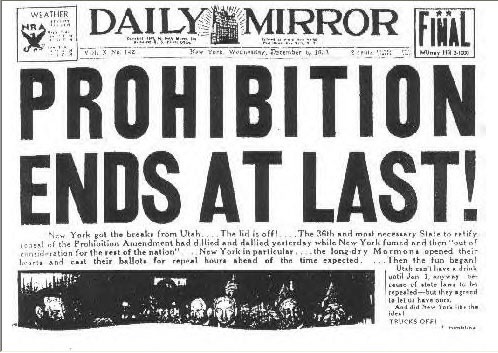
Laws and mandates have major changes on the products and services that we use. Markets for goods and services are created and disrupted. An example of this is the Prohibition era in the United States. Prohibition was a time when the sale of drinking alcohol was made illegal by States and the Federal government. The logic behind the ban was that quality of life would improve because the consumption of alcohol would decrease. But did this happen? Nope. Instead the sales of alcohol skyrocketed. Bootleggers became rich by selling alcohol. All Prohibition did was disrupt the traditional alcoholic beverage market into a black market. People were able to make a business out of selling illegal alcohol.The same could be said for the sale of illegal drugs.

The auto industry also created a new market for the energy conscious with the release of the electric car and the hybrid. These changes created jobs in the green economy.

During my time the dental industry, I noticed a surge in product sales of Amalgam Separators. This occurred after an environmental law was passed across the United States; barring Dentist’s from pouring amalgam(mercury) used in fillings down the sewer. Amalgam had to be separated into a separator and disposed of through special means. Think of commercial waste.

If you want to see what markets will be created and disrupted; look to the laws and mandates of the government.prohibition-ends-daily-mirror-nyc1

2014 in review

The WordPress.com stats helper monkeys prepared a 2014 annual report for this blog.

Here’s an excerpt:

A San Francisco cable car holds 60 people. This blog was viewed about 3,300 times in 2014. If it were a cable car, it would take about 55 trips to carry that many people.

Click here to see the complete report.

Surviving & Thriving through Cold Calls, Sales Objections & Rejection

Cold Calling

Whether you are a veteran or if you are new in sales, you will have to make cold calls to build your customer base. Many sales people dread making cold calls.

However, if you approach it the right way; cold calling can be a great way to develop your selling skills and forge great relationships with your future customers.

When you first call on an office or business, chances are that when you enter, the first person that you will have to speak with is the gate-keeper. The gate-keeper can have the title of Receptionist or Personal Assistant. The gate-keeper’s job is to act as a screener for their boss. Their boss uses them to screen or qualify people who attempt to contact them.

As a Sales Representative in New York City, I have first-hand knowledge of how to engage them in the cold calling situation. I would always sell myself first. When I made a cold call, I would first go into the office and speak with the person at the front desk. I would smile at them and introduce myself. I would say the following:

Hi my name is Dan. The Gatekeeper would then reply with something along the lines of hi Dan what can I do for you. After a bit of engagement and small talk I would tell them the company I was with and ask him or her if they were the decision maker of the product or service I was selling. (It is always important that you are in front of the people who can say yes to you.) I asked this question to validate the person’s importance. Usually the gate-keeper would reply that they were not in charge of that. I would then ask them who was in charge. My goal was to make the gate-keeper a friend. Friends’ help their friends succeed. (There were times in which this frontline person was very nasty to me and I was not able to obtain this information on the initial call. If this occurs it is imperative that you keep your cool if you ever want to have a chance to sell that business your products and services.)

Now if the decision maker was not available to speak to me, I would inquire about what was a good time for me to speak with that specific person. I would then offer them my card and product literature. (Again the cooperation of this person will vary.)

Once in a while the decision maker will make an appearance asking the gate-keeper about who you are or they may question you directly. It is imperative that you are prepared to engage the prospect and ready to answer any questions they ask you. (Objections) When a decision maker made an appearance, I would engage them in a bit of small talk; trying to make them a friend. I would introduce myself and my products. I would ask what supplier they were using and use that information to give a brief on the spot sales presentation. Once I gave this presentation, I would ask for a commitment. I would ask a closing question. Sometimes I made a sale. Many times, I had to obtain their business card and call on them again. (It is important to note that if you are selling a high ticket item you will have to close the client on the next step in the process and not the sale of the item.)

It is important to keep a record of information that you obtain during the call. This can be done on a log sheet or by updating your crm software.

Handling Objections and Stalls

In sales, everyone has to be able to overcome objections in order to be successful. The best way to overcome objections is to prevent them. This can be done by providing a thorough sales presentation that covers all the information about your products and services. Also it is imperative that you address any questions the prospect has immediately. However, objections will come up from time to time. Some of these objections are real buying signals and others are just stalls to put you off. As a Salesperson, you need to be able to tell the difference. This will come with experience and by reading situational cues in each selling situation. Remember the prospect is buying you. In other words, you are part of the offering. Below, I have put together a comprehensive list of objections that I encountered and overcame as an outside sales representative in New York City.

I am happy with my current supplier.

When you call on a prospect they say we are happy with our current supplier, this can mean one of two things. The first is that they are truly happy and the second is that they want you to get lost. (A stall) Obviously you need to be able to tell the difference. You should be able to tell by a prospects body language and level of attention. If it is the first scenario, you should find out what supplier they currently use. When the prospect tells you it is your job to demonstrate how you are better. (I mentioned this in a previous post. Once you feel that you have demonstrated how you are better, ask for a commitment or a small order. By asking for a small order, you provide the prospect an opportunity to take a chance on you with minimal risk. I have had a lot of success with approach. If the scenario is the second one, the prospect will not provide you with any information or say that they deal with a company or person for 20 years and they do not want to change. In this case, I would still ask for the order. Should the prospect say he is not interested again, I would thank them for their time and leave. You should call on this prospect a few more times and then only call on them every two months. You need to focus your time on prospects that are receptive to you and your offering.

I want to think it over.

When you hear this, what the prospect is really saying is I am interested but I am not totally convinced. You should ask the prospect what specifically about this offer do you want to think over? You goal here is uncover the real objection. If the prospect gives you a specific answer, you are in business. Address the objection and ask a closing question. Say if I can handle xyz, is there any reason why you would not purchase this product. Should the prospect say, no you covered everything, this means that they are either stalling, not interested in your offering or will not tell you the real issue they have with your product. If this is the case, ask when they plan on making a decision and follow-up with them in that timeframe.

I need to consult another party.

This can be a stall to put you off. You will need to determine this by the prospects body language and the level of attention you receive. When the prospect tells you this, you should ask for a meeting with the prospect and the person they need to consult. Should the prospect agree to this, you have a chance. If they will not agree to a meeting, it is a stall and they are not interested in your offering. However, I would still call on them a few more times. If you have no success, call on them every two months.

Your price is too high.

Emphasize the quality of your product along with the level of service you will provide. Next, you should demonstrate to the prospect how your offering’s total cost is less than the competitors over the life of the product. Testimonials from loyal customers can also help you here. By taking these steps you demonstrate that your product is valuable and increase your chances of making the sale. (Provided this is the real objection.)

We spent our budget.

I covered this in my last post. If they say the money is not the budget, ask If I can offer delayed billing or a payment plan would you be able to take delivery? If the person needs approval from another person, ask to present your product to that individual with your prospects endorsement. Should the company really want and need your product, they will find a way to pay for it.

I am not the decision maker.

Present your offering briefly and ask who makes the decision. If you present your offering in a way that demonstrates value and this person really is the decision maker; they may show interest and make a purchase.

I had a bad experience with your company.

I would apologize to the prospect about the experience. Tell them you are the new rep and that you will not let anything bad happen on your watch. Ask them to give you a chance. This will not work all of the time.

Handling Holiday Stalls

In prior articles, I have written how to get prospects and customers to buy. However, today’s focus is getting around the customers or prospects objection “call me after the holidays”. You have to attempt to get around this objection. If your offer is time sensitive or if you can provide a break on pricing or payment through a special promotion for example no payments for 3 months; make your customer aware of them. However, at this time of the year, you will get customers and prospects who just don’t want to deal with you and your offering. As a sales rep, it is your job to be able to tell if the customer and prospect is telling you the truth. In other words, you need to qualify their objections. This means following up with every customer and prospect even when things look bleak.

Should your customers and prospects insist that call you them after the holidays, I would find out which holiday they mean. Next, I would pin them down to a specific day and time to call back. I recommend sending your customers and prospects a holiday card with a little note reminding them about the appointment; stating how you look forward to speaking with them on the specific date and time. Once this time comes, I would hold them to their promise. Deliver your presentation and ask for the business.

Most importantly, never give up! I have made some of my best sales after I was rejected by a prospect. Remember to not take the rejection personally. Having a thick skin is something that has to developed. I became desensitized to rejection over time as I experienced it often early on.

This is a quick guide on how to how to survive & thrive through cold calls, sales objections & rejection. Feel free to take this with you in the field as you make sales calls.